
For homeowners in Clearwater, the Pinellas beaches and other flood-prone areas around Tampa Bay, repairing or remodeling a home can involve more than choosing a contractor and establishing a budget. If the home is located in a regulated floodplain, the proposed work may also be affected by what is commonly known as FEMA’s 50% Rule.
This rule can determine how much work may be completed before an existing structure must be brought into compliance with current floodplain requirements. It can affect storm repairs, major renovations, additions and other improvements, even when the homeowner has the money needed to complete the project.
Understanding the rule before beginning design, demolition or construction can help homeowners avoid expensive surprises.
What Is FEMA’s 50% Rule?
–> You can watch Greg’s explanation of the FEMA 50% Rule here
In general, if the cost of repairing or improving a structure reaches or exceeds 50% of the structure’s market value, the work may be classified as a substantial improvement. A building damaged by a storm, flood or other event may similarly be classified as substantially damaged when the cost of restoring it reaches or exceeds the same threshold.
Once that threshold is reached, the structure may need to be brought into compliance with current floodplain management requirements.
A simplified calculation looks like this:
Structure Value × 50% = Improvement Threshold
For example:
- A structure valued at $200,000 may have a 50% threshold of $100,000.
- A structure valued at $350,000 may have a 50% threshold of $175,000.
- A structure valued at $500,000 may have a 50% threshold of $250,000.
The local building or floodplain authority ultimately determines the applicable value, which costs must be included and whether the proposed work crosses the threshold.
The Property’s Sale Price Is Not Necessarily the Number That Matters
One of the most common sources of confusion is the difference between the value of the entire property and the value assigned to the structure.
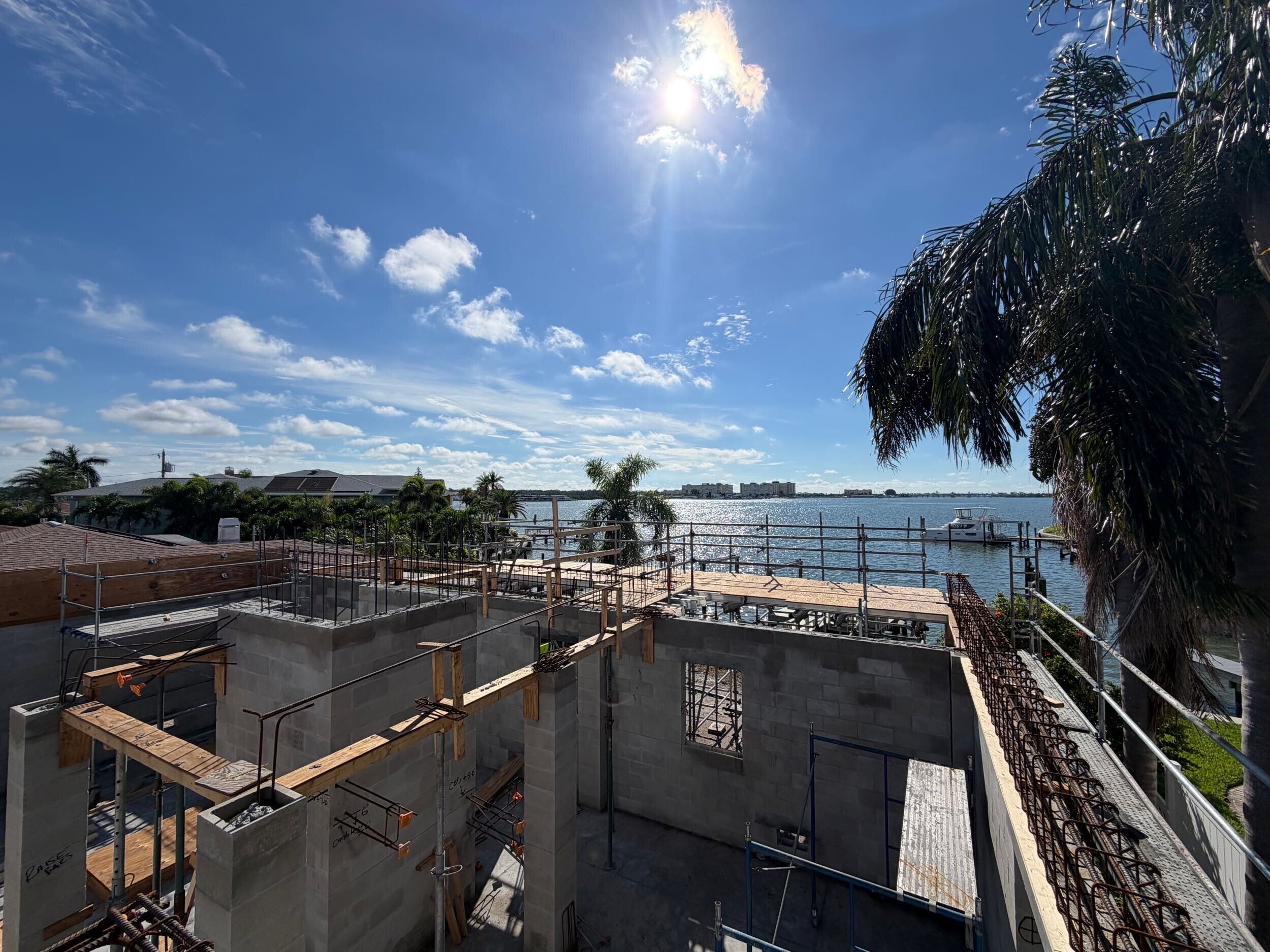
A coastal property may be worth $1 million or more, but a significant portion of that value may come from the land and location. The 50% calculation generally focuses on the value of the building itself—not the value of the land beneath it or the property’s total potential sale price.
That means a $1 million waterfront property does not automatically provide a $500,000 improvement allowance.
Property appraiser records may provide a starting point for determining the structure’s value. In some circumstances, a qualified private appraisal may help establish a more accurate value. However, the appraisal methodology and supporting documentation must be acceptable to the local municipality.
Homeowners should confirm the applicable value before relying on an estimated renovation budget.
What Happens If a Project Exceeds the 50% Threshold?
Exceeding the threshold does not necessarily mean that every homeowner has the same solution. The practical options depend on the home, its construction, its elevation, the extent of the proposed work and the requirements of the municipality.
Three potential paths are commonly considered.
1. Elevate the Existing Home
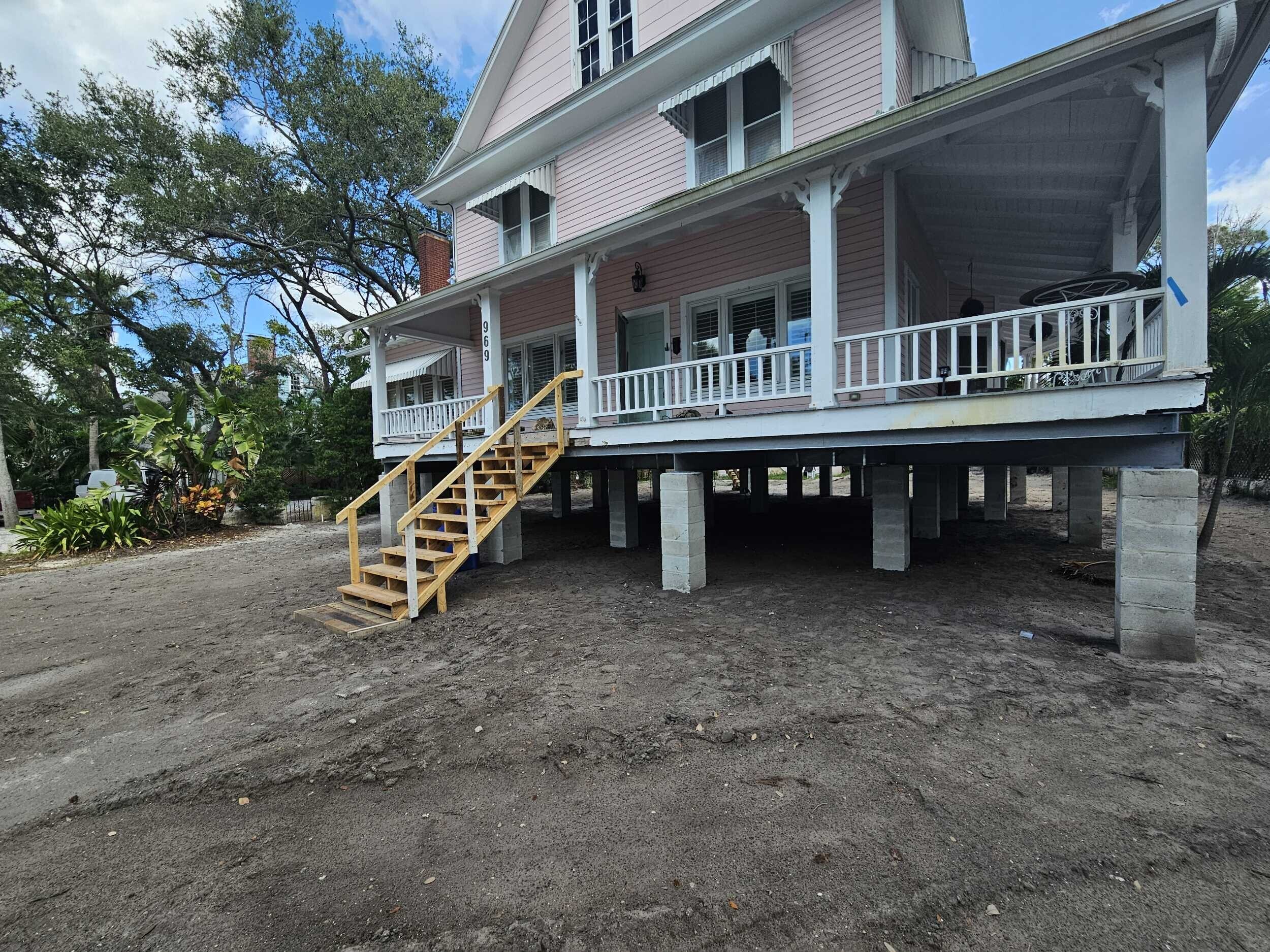
In some cases, an existing structure can be raised so that its lowest occupied floor meets the required flood elevation.
This approach may be most practical for certain wood-frame homes that are already built above the ground. The project may involve lifting the structure, constructing a new compliant foundation and reconnecting utilities.
Homeowners must also account for the possibility of damage to windows, plaster, drywall and other existing finishes during the elevation process.
2. Move the Living Space Upstairs
Another potential approach is to construct a compliant upper level and convert the existing lower floor into approved non-habitable space.
Although this may initially sound less expensive than rebuilding, adding another story can require extensive structural work. The existing foundation, walls and connections were designed to support the original home. Adding another level may require new engineering, foundation reinforcement and modifications throughout the existing structure.
By the time the necessary reinforcement and reconstruction are considered, this option may not be substantially less expensive than constructing a new home.
3. Build a New Flood-Compliant Home
For a severely damaged home—or one requiring extensive structural modification—rebuilding may offer the clearest long-term solution.
A new home can be designed around current floodplain requirements from the beginning. It can also provide greater flexibility in the floor plan, construction method, energy efficiency, materials and architectural design.
Rebuilding is a major decision, but it allows the homeowner to compare the cost of preserving an older structure with the value and resilience of an entirely new home.
If you’re unsure which solution is best for your home, reach out to us, and we’ll help you determine the best path for your situation. We’ve completed numerous projects using each of these approaches, and we’re well-versed in completing them efficiently.
—
Nelson Construction and Renovations, a family business founded in 2006, is a design-build company that specializes in high-end remodels, home additions, and custom homes. With our headquarters in Clearwater, Florida, we serve homeowners all over Pinellas and Hillsborough Counties. We are an award-winning member of the National Association of the Remodeling Industry and have an A+ rating with the Better Business Bureau.
Creative Commons Attribution: Permission is granted to re-post this article in its entirety with credit to Nelson Construction and a clickable link back to this page.